

The Major Marble Industry in Rajasthan: Backbone of India’s Stone Craftsmanship
5/2/2025
Introduction
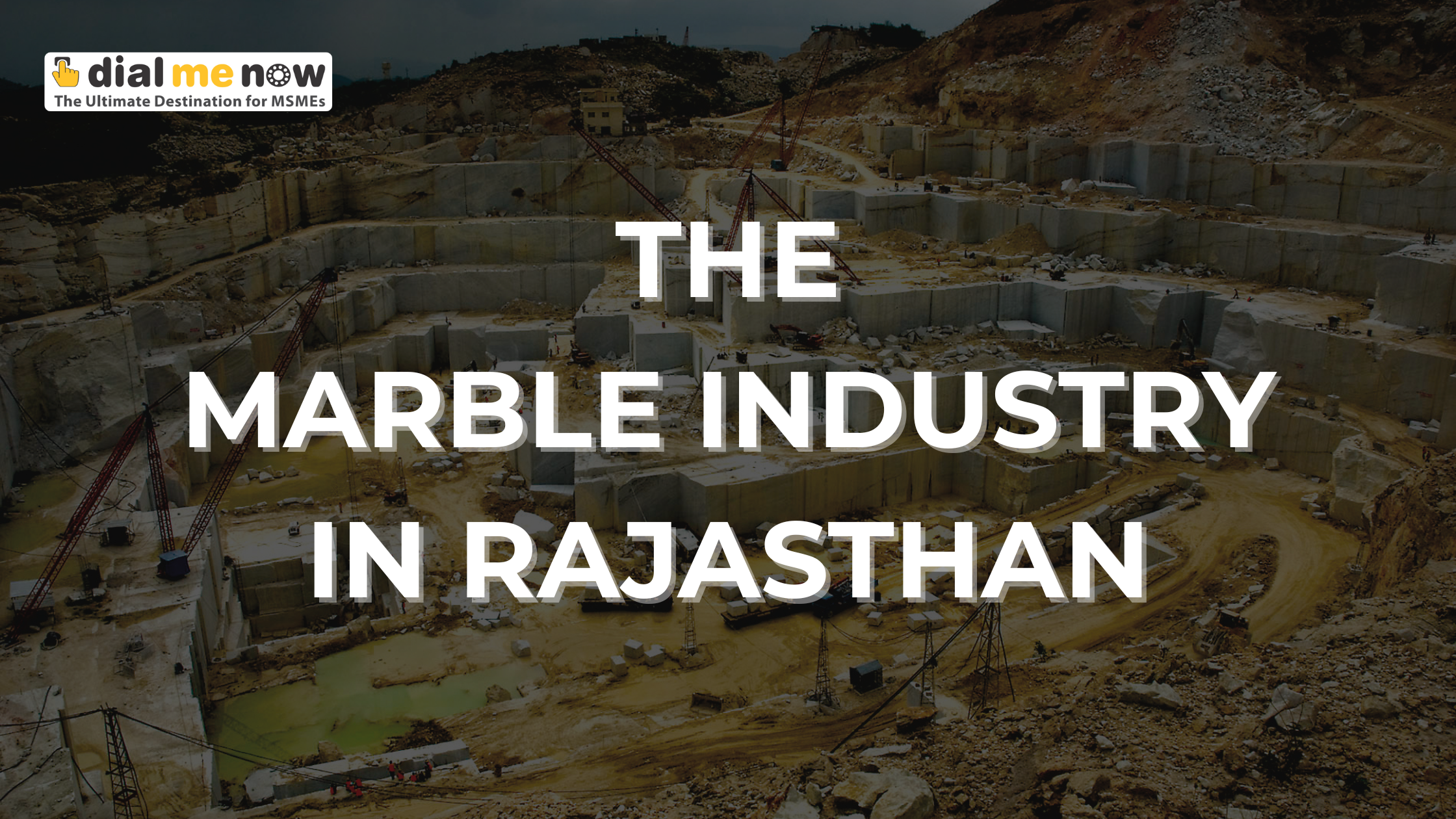
Rajasthan, known for its royal heritage and vibrant culture, is also the epicenter of India’s marble industry. With vast reserves, skilled artisans, and a thriving export network, Rajasthan has rightfully earned its title as the Marble Capital of India. Rajasthan, often referred to as the Marble Capital of India, is globally renowned for its rich deposits of high-quality marble, particularly from the Makrana region, which has been a prominent source of marble for centuries. This blog highlights the The Marble Industry in Rajasthan as how it is the backbone of India’s stone craftmenship with a golden historical significance.
Major Marble Extraction Sites In Rajasthan
1)Kishangarh – The “Marble City of India”. Here exists the Asia’s largest marble market. Over 10,000 marble units and showrooms are operating here. It is known for its Known for varieties like Vietnam White, Albeta, Dungri, and Onyx and also a major exporter to the UAE, USA, Europe, and Southeast Asia.
2)Makrana – This Place is known as the “The Pride of Mughal Architecture”. It is Home to the Makrana White Marble, famously used in the Taj Mahal. Here you can see the Oldest marble quarry in India, operational since the 16th century. Its also a Government-certified Global Heritage Stone Resource.
3)Rajsamand & Udaipur – This area is known as “The Green Marble Belt” Known for Green Marble, popular in flooring and wall cladding. More than 500 mines are operating in this region. The Marble found here is exported in the form of polished slab and block forms to Italy, China, and Middle East.
4)Banswara – This palce is the “The New Marble Destination”. This place is an Emerging cluster with unique beige and brown marbles Attracting modern architecture projects across India.
Types of marbles/ stones
| Marble Type | Colour /Appearance | Major Location |
| Makrana Marble | Pure White, sometimes with light veins | Makrana (Nagaur) |
| Albeta Marble | White with gray or brown patterns | Makrana, Kishangarh |
| Dungri Marble | Milky white with subtle patterns | Makrana, Kishangarh |
| Morwad Marble | White with soft greenish patterns | Rajsamand |
| Rajnagar White Marble | Brilliant pure white | Rajsamand |
| Pink Marble | Light to deep pink shades | Udaipur, Jaipur |
| Green Marble | Dark to light green (Verde Guatemala look) | Udaipur, Kesariyaji |
| Black Marble | Deep black with minimal white veins | Abu Road, Udaipur |
| Katni Marble | Beige and cream shades | Nearby MP-Rajasthan border |
| Brown Marble | Chocolate brown with textures | Jalore region |
| Onyx Marble | Translucent with multi-color bands | Udaipur, Jaipur |
Challenges Faced By Marble Industry in Rajasthan
Despite its strengths, the marble sector faces several hurdles:
1)Environmental Concerns and Sustainability
Rajasthan’s marble reserves are finite, and excessive mining without sustainable practices is leading to concerns about resource depletion. Unregulated mining practices and poor waste disposal methods are contributing to deforestation and soil erosion. This has raised concerns among environmentalists and local communities about the long-term viability of marble mining in the state. In regions like Makrana, where water resources are already scarce, this exacerbates the problem of water scarcity, impacting both the marble industry and local agriculture.
2)Technological Limitations
Despite the increasing demand for marble, much of the industry in Rajasthan still relies on traditional mining and processing techniques. The use of manual labor and inefficient machinery leads to high operational costs, waste generation, and suboptimal production rates. While modern machinery and automation exist, their adoption has been slow due to high initial investment costs. The lack of innovation in processing techniques limits the industry’s ability to offer diverse products and cater to niche markets.
3)Waste Management and Recycling Issues
Marble extraction and processing generate substantial waste, including marble slurry and stone chips. Unfortunately, a large proportion of this waste is not recycled effectively, leading to environmental pollution. The improper disposal of marble slurry is contributing to the degradation of local water bodies, affecting both the environment and local communities.
4)Regulatory and Legal Issues
The marble mining industry in Rajasthan is governed by a complex web of regulations and licensing processes. Ambiguities in the implementation of these policies can create delays and increase costs for businesses. Frequent changes in tax policies, mining regulations, and environmental compliance rules add to the uncertainty faced by the industry.
The Future of Marble Industry in Rajasthan
1)Sustainability and Eco-Friendly Practices
As the global emphasis on sustainability intensifies, the marble industry in Rajasthan will need to adopt more environmentally responsible mining practices. This includes the use of eco-friendly technologies, such as dust suppression systems, water recycling, and low-emission equipment to minimize environmental damage.
2)Technological Advancements
Automation and Modern Machinery: The future of Rajasthan’s marble industry lies in adopting cutting-edge technologies that enhance productivity, reduce costs, and improve product quality. The integration of automation and robotic systems for cutting, polishing, and carving will help streamline operations, increase precision, and reduce labor costs.
3)Workforce and Skill Development
Skilled Labor Initiatives: The future of Rajasthan’s marble industry relies on a highly skilled workforce capable of working with advanced machinery and creating intricate designs. To meet this need, there will be an increasing focus on training programs and skilled labor development, especially for younger generations. 4. Global Competitiveness and Export Growth
Strengthening Export Networks: Rajasthan will continue to solidify its position as the world’s marble supplier, with a focus on expanding export markets and strengthening relationships with key global buyers.
4)Government Support and Policy Development
Support for Innovation and Infrastructure: The future of Rajasthan’s marble industry will benefit from government policies that support innovation, infrastructure development, and industry clusters. Special industrial zones and marble parks could be developed to provide a more centralized approach to mining, processing, and marketing.
Global Reach Of Marble Industry in Rajasthan
As the Marble Capital of India, Rajasthan plays a crucial role in the global supply chain of marble products. The state exports to countries across the globe, including the United States, the United Arab Emirates, the United Kingdom, and Italy—all of which seek Rajasthan’s premium quality marble for their construction and design needs. Moreover, trade fairs and exhibitions held in cities like Jaipur showcase Rajasthan’s marble industry, attracting buyers, designers, and builders from around the world.
Conclusion
The marble industry in Rajasthan is not just a business—it is an art, a heritage, and a major pillar of the state’s economy. With support from government bodies like RIICO, an eye on sustainability, and a push for global markets, the future of Rajasthan’s marble industry looks bright and resilient. Rajasthan’s marble industry is also evolving with the times, embracing sustainability by promoting eco-friendly mining practices, recycling waste materials, and adopting cutting-edge machinery that reduces environmental impact. The establishment of marble clusters and industrial parks across the state has streamlined the production process, offering both large-scale and small-scale enterprises an opportunity to grow and innovate.
Disclaimer
This article are based on available market data, industry trends, and publicly accessible information. Readers are encouraged to verify details from official reports. These sequence does not mean to rank or show which or any company is better than others in any way. It’s just for representation purpose only.