

Nagaur – Land of Spices: Explore the Vegetarian Food Specialities of the Desert Town
10/29/2025
Introduction
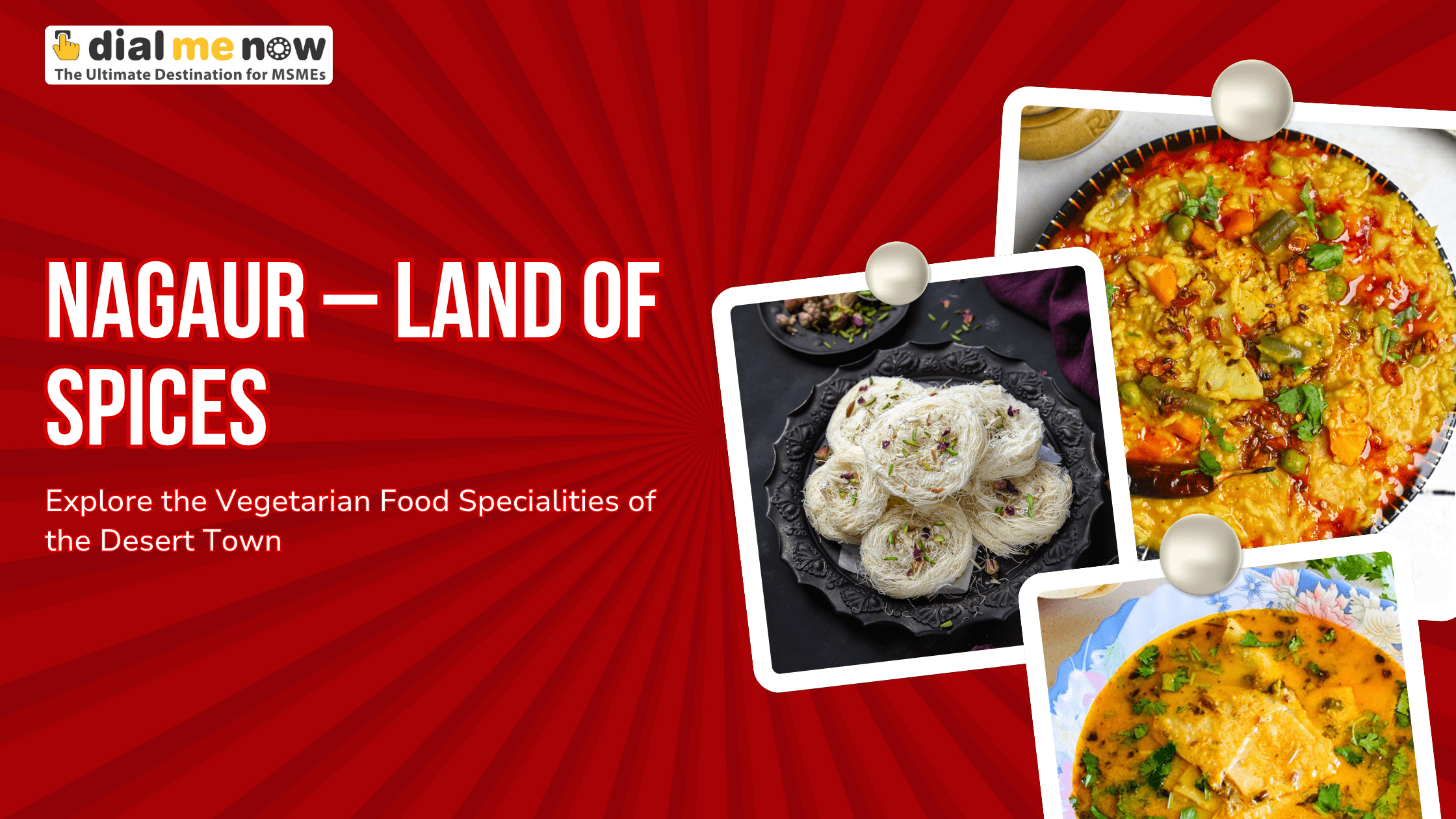
Nestled almost midway between the desert towns of Jodhpur and Bikaner lies Nagaur, a lesser-known but culturally rich city in Rajasthan. Besides its historical fort and dusty dunes, Nagaur is celebrated for its distinct vegetarian culinary traditions—where the arid land’s resourcefulness and royal heritage combine to produce vibrant flavours. In this blog we’ll journey through Nagaur’s food lanes, focusing especially on three vegetarian specialties: masala khichdi, papad ki sabzi, and sutarfeni. We’ll also highlight where to find them—specifically around Nagaur main market and near Nagaur Fort — and explore how they reflect the region’s spice-laden identity.
Nagaur’s Culinary Context
To appreciate Nagaur’s food specialities, some context helps.
- Nagaur’s cuisine draws heavily from the Marwar region’s traditions — the dry lands, the Thar-influenced climate, and a long history of resourceful cooking.
- Locals often remark that Nagaur is “famous for spices and sweets (mithai)”.
- While many Rajasthani dishes lean non-vegetarian, in Nagaur and surrounding areas you will find strong vegetarian traditions, partly due to Jain and Marwari communities, and partly due to the adaptation to local resources (limited fresh vegetables, reliance on pulses, grains, dried ingredients).
- Street food culture is alive in Nagaur’s main market lanes near the fort, where you’ll find vegetarian snacks, sweets, and home-style thalis.
Given this backdrop, let’s explore the three key dishes.
1. Masala Khichdi: A Spicy Rustic Delight
What It Is
The term “khichdi” often invokes a simple porridge-like dish of rice and lentils; however, in Nagaur it takes on a more regal, flavour-packed persona—masala khichdi. While there may not be many online records naming it specifically “Nagaur masala khichdi”, it aligns with the wider Marwari take on khichdi and rice-pulse dishes adapted for the desert kitchen.
Key Ingredients & Flavor Profile
- A base of rice and moong or mixed lentils, sometimes with added peas or vegetables (when available).
- A robust spice mix: cumin, turmeric, red chili, garam masala, dried herbs.
- Ghee (clarified butter) is generously used to enhance flavour and richness.
- Accompaniments: curd or buttermilk, pickled chillies, perhaps fried onions or papad on the side.
- A dry-ish consistency (not too watery), since moisture is often limited in desert kitchens.
Why It Stands Out in Nagaur
- The dish reflects adaptation: when fresh vegetables were limited, pulses and grains took centre-stage—as many desert cuisines show.
- It carries the spice signature of Marwar cuisine — bold, aromatic, with a hint of dryness and ghee richness.
- Served well in local eateries around Nagaur’s market and near the fort, it offers travellers a hearty vegetarian option.
Where to Try It & Tips
When strolling around Nagaur main market or the lanes near Nagaur Fort, look for small eateries advertising “khichdi” or “masala khichdi” on the board. Ask if it’s vegetarian (very likely) and request extra ghee if you like richness. Pair it with curd or a raw onion & chili salad for contrast.
2. Papad ki Sabzi: The Ingenious Curry
What It Is
One of the more ingenious vegetarian dishes from Rajasthan is papad ki sabzi — where roasted or fried papad (thin lentil-based crisp) is simmered in a spicy curd and tomato gravy to create a rich sabzi. The recipe is common in the state and likely features in Nagaur homes and food stalls as well.
Preparation Overview
- Start by roasting or lightly frying a few papads (e.g., moong dal or urad dal) and breaking them into pieces.
- Prepare a base of cumin seeds, asafoetida, ginger-garlic paste, tomato puree, turmeric, chili powder and coriander powder.
- Add whisked yogurt gradually, then add papad pieces, kasuri methi (dried fenugreek leaves), and simmer until the papads soften slightly and absorb the gravy.
- Garnish with coriander; serve hot with roti or bajra/jowar roti.
Why It Fits Nagaur
- Excellent example of how desert-region cooks make vegetarian meals without relying heavily on fresh vegetables: papads serve as both texture and substance.
- The heavy spices and ghee-rich preparation reflect Marwari flavour profiles.
- For vegetarian travellers or local vegetarian households in Nagaur, this dish offers novelty and depth.
Tips for Enjoyment
When you see “papad sabzi” on the menu in Nagaur, don’t hesitate. Ask for it with jowar or bajra roti for the full Rajasthani experience. Because it has yogurt, ensure it’s freshly made and not reheated too much (to avoid curdling).
3. Sutarfeni: The Sweet Finisher
What It Is
While less widely documented than some sweets, sutarfeni is a flaky, fine-threaded sweet (sometimes spelled “suta pheni” or “sootar feni”) loved in certain parts of Rajasthan. In the context of Nagaur — which is known for sweets (mithai) as part of its spice & sweets heritage.
Features & Flavour
- Sutarfeni consists of ultra-thin, delicate strands of dough or flour mixture (often akin to vermicelli threads), deep-fried or baked, then soaked in sugar syrup or sweetened milk, possibly topped with nuts or saffron.
- The texture is light, crispy yet melts in the mouth; flavour is sweet but often balanced with aromatic cardamom, saffron or rose.
- It serves as a dessert or sweet token and is ideal after a spicy meal.
Why It’s Worth Trying in Nagaur
- Complements the savoury spice-rich meal with a contrasting light sweetness.
- The dessert culture of Nagaur shows that sweets are integral to its culinary identity (the city page says the place is “famous for spices and sweets”).
- Found in sweet shops around Nagaur main market — perfect for buying to take home.
Sweet-Snack Shopping Tips
Visit sweet shops near Nagaur market that display mithai. Ask specifically for “sutarfeni” or variations like “suta pheni”. Because the threads are delicate, for travel bring sealed packs and avoid strong heat/humidity. It also makes a great souvenir edible gift.
Where to Eat & Explore in Nagaur
- The main market area in Nagaur is a vibrant maze of food stalls, vegetarian eateries, mithai shops and local cafes. This is where you’ll find street-level specialities and local flavour.
- Near Nagaur Fort: The historic fortress area draws both visitors and locals; eateries nearby often cater to both with local vegetarian thalis and special dishes—including the ones we’ve discussed.
- Practical Tip: Go late afternoon or early evening for the best street-food vibe — when shops open and the market livens up. Ask for purely vegetarian options if that’s your preference (“pure veg thali” or local “shudh vegetarian”).
- Budget & Comfort: Many places are modest, clean but simple; for a more comfortable sit-down vegetarian restaurant, you may find a mid-range hotel restaurant in the area. (As a web-search shows, Nagaur’s restaurants listing indicates many options though varied in rating.)
Travel & Local Eating Etiquette
- Dress modestly: Nagaur is a traditional Rajasthani city; modest attire helps when visiting market lanes or more conservative eateries.
- Ask about “shudh veg” if you want guaranteed vegetarian. Many places default to vegetarian but it’s good to clarify.
- Water & heat: Being in a semi-desert zone, the afternoon can be very hot — plan lunch early or eat later when the air cools.
- Spice level: Local dishes tend to be bold; if you’re a milder-flavour person, ask for “less chilli”.
- Buying sweets: For sutarfeni, check weight and packaging if taking home — many shops will pack it in gift boxes.
- Respect local timings: Some small shops may close in afternoon or for short breaks; best to target evenings.
Frequently Asked Questions (FAQ)
Q1: Are the specialities like masala khichdi, papad ki sabzi and sutarfeni exclusive to Nagaur?
A: Not strictly exclusive, but these dishes are very much in the spirit of Nagaur’s vegetarian, spice-rich cuisine. While you may find versions elsewhere in Rajasthan, Nagaur’s market and local food culture give them a distinct local twist.
Q2: Can I find these dishes in purely vegetarian restaurants in Nagaur?
Yes — since many local eateries in Nagaur are vegetarian or have vegetarian thalis, you’ll commonly find papad ki sabzi and vegetarian khichdi. Always ask for vegetarian. Sutarfeni will be in mithai shops.
Q3: What time is best for food-hunting in Nagaur?
Evening (around 5:30-8:30 pm) tends to be good for street food. For lunch, aim around noon. For sweets, the main market area remains open through day and evening.
Q4: Are these dishes heavy or light?
Masala khichdi is hearty but for vegetarian pulses/grains — not overly heavy like heavy cream curries. Papad ki sabzi is moderate — papad gives texture, yogurt-tomato gravy gives richness. Sutarfeni is light and perfect as a post-meal sweet.
Q5: Is the cuisine in Nagaur suitable for vegan or gluten-free diners?
Vegetarian yes; many dishes may use ghee (clarified butter) or dairy (like yogurt in papad ki sabzi) so you’ll need to ask for “without ghee” or “without yogurt”. For gluten-free: papad (if made from lentils) and khichdi (rice/pulse) might be okay, but check roti types (e.g., bajra/jowar better than wheat). Always ask the vendor/restaurant.
Why Nagaur Should Be On Your Food Map
- Unique vegetarian spin in a region more known for heavy meat-curries: Nagaur lets you explore spice, pulse, grain-based vegetarian dishes in a desert-heritage setting.
- Authentic local flavour: The main market and fort-area eateries are less “tourist-only” and more reflective of everyday local dining.
- Spice and sweet balance: From richly spiced khichdi and papad curry to delicate sutarfeni, the journey spans savoury to sweet, making for a compelling food trail.
- Cultural immersion: Eating in Nagaur also means experiencing Rajasthani hospitality, local rhythms, and the intersection of desert climate, trade history and food adaptation.
Final Thoughts
If you are planning a stop in Nagaur — whether as part of a Rajasthan road-trip or exploring authentic vegetarian cuisine in India — be sure to set aside a food walk in the market lanes near Nagaur Fort. Start with a hearty plate of masala khichdi, follow with papad ki sabzi and jowar or bajra roti, and wind down with a sweet box of sutarfeni. These dishes will leave you with not just full stomach but enriched by the spice-laden, resourceful vegetarian tradition of Nagaur.
Disclaimer
The information in this blog is for general informational purposes only. While every effort has been made to ensure accuracy (based on available sources and local food culture), dish availability may vary by restaurant, season, and local vendors. Please check with the local establishment for specific vegetarian/vegan requirements or ingredient details.