

Hiking Guru Shikhar: Conquering the Highest Peak in Rajasthan
9/2/2025
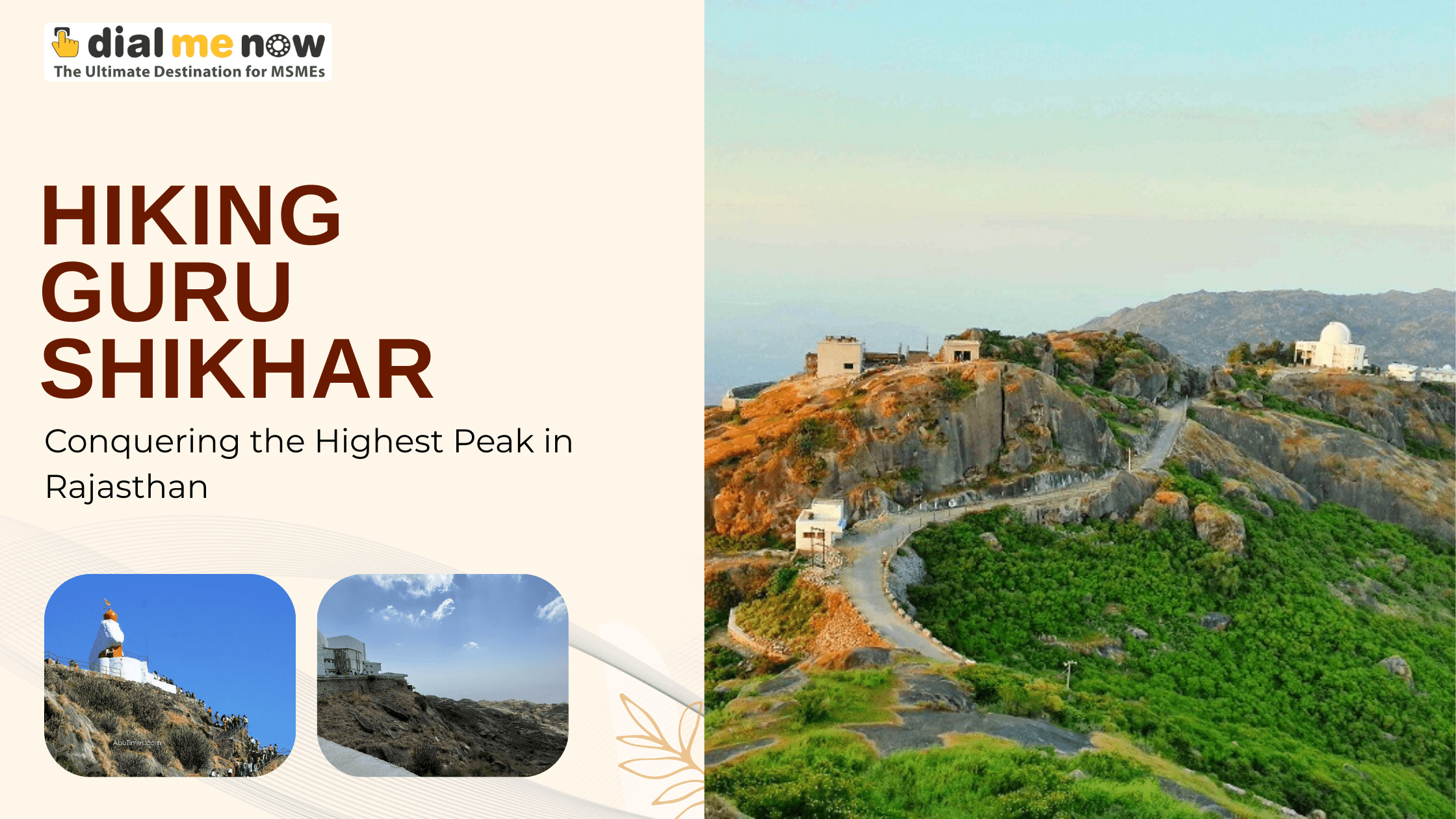
Perched at 1,722 meters (5,650 ft), Guru Shikhar is the literal high point of Rajasthan—and of the entire Aravalli Range—offering a horizon-to-horizon sweep over forested ridges, granite domes, and the lake-dotted hill town of Mount Abu below. It’s a rare mix of sacred pilgrimage, easy-access hiking, and serious science, thanks to the venerable cave-temple of Lord Dattatreya at the summit and the Mount Abu Observatory nearby. Whether you’re a culture-seeker, a photographer, a family traveler, or a hiker looking for a crisp, breezy climb with big payoff, Guru Shikhar will get under your skin in the best way.
What—and where—exactly is Guru Shikhar?
Guru Shikhar rises from the Arbuda (Aravalli) Mountains in Sirohi district, about 15–16 km by road from Mount Abu town. A motorable road carries you most of the way; the final approach is a stone stairway (roughly a few hundred steps), which funnels you through stalls selling tea, peanuts, jalebi, woolens, and temple offerings before delivering you onto wind-buffed rock and those endless views. Rajasthan Tourism lists Guru Shikhar as the highest point of the Aravalli Range and notes the climb to the Dattatreya temple at the top.
A short history & the long memory of the peak
“Guru Shikhar” literally means “Peak of the Guru,” named for Dattatreya, the composite sage considered an embodiment of the Trimurti—Brahma, Vishnu, and Shiva. The summit cave-shrine honors him, and a smaller shrine nearby is dedicated to his mother Anasuya; many pilgrims point out a sacred footprint in the cave and ring the great bell at the entrance. The temple’s living traditions are as much about the ever-present wind and the ritual of the climb as they are about any single text or inscription—here faith is walkable and tangible. (Some travel guides render the mother’s name as Ahilya, but the traditional reference is Anasuya.)
The science on the summit: Mount Abu Observatory
Just off the crest, on a bald outcrop that looks like it was engineered for astronomy, sits the Mount Abu InfraRed Observatory (MIRO), run by the Physical Research Laboratory (PRL). For decades, its 1.2 m infrared telescope has been India’s workhorse for ground-based infrared observations. In 2022, PRL integrated a new 2.5 m telescope with advanced optics and the PARAS-2 spectrograph, supercharging India’s exoplanet-hunting capability. It’s awe-inspiring to stand between a living place of worship and a living lab, watching devotees and scientists both climb toward understanding. Note that this is an active research facility, not a tourist attraction; access policies vary—check PRL resources for programs and schedules.
Why Guru Shikhar matters beyond the view
- Geological significance
The Aravalli is among India’s oldest mountain systems, a survivor from deep geological time. Standing atop Guru Shikhar is to stand on a page from the Paleoproterozoic—and to appreciate how this ancient spine has shaped climate, culture, and trade routes between Rajasthan and Gujarat. - Ecological hotspot
Guru Shikhar falls within/adjacent to the Mount Abu Wildlife Sanctuary, a rugged patchwork of evergreen pockets and dry deciduous forest where sloth bears, leopards, sambar, and more than 200 species of birds (including the vulnerable Green Avadavat) have been recorded. The sanctuary was notified in 1980 and its eco-sensitive zone formalized in 2020—another reason to tread lightly. - Cultural continuity
The Dattatreya cave-temple binds the peak to living ritual—bells, tilak, prasad, and family pledges made in the wind. The climb is devotional, but its openness makes it interfaith-friendly and hospitable to curious travelers who come respectfully.
Planning your hike: when to go & what to expect
Best seasons
- October–March (winter): Clear air, cool days and cold evenings—bring layers.
- April–June (summer): Warm but milder than the plains; mornings and late afternoons are pleasant.
- July–September (monsoon): Lush and misty, with slippery steps and patchy visibility—romantic, but be rain-ready.
Temple timings
Typical opening hours hover around 8:00 am–6:30 pm, but schedules can shift with festivals and weather. When in doubt, plan to arrive in morning light; the climb, darshan, and photo stopovers can comfortably fit a 2–3 hour window.
Route & difficulty
From Mount Abu town, take the Guru Shikhar road toward the upper parking. The last stretch is via stone steps that most reasonably fit visitors can manage at an easy pace; elders and children often do this with rests at the tea stalls. On a crisp day, the wind can be fierce at the top—cap and windcheater recommended.
Sunrise or sunset?
Sunrise offers crystalline views and fewer crowds; sunset gilds the ridge lines, though departing in daylight is safer along the bends.
Getting there: road, rail, air
- By road: Mount Abu is well connected to Udaipur, Jodhpur, and Ahmedabad. From town to Guru Shikhar is ~15–16 km, about 30–40 minutes depending on traffic.
- By rail: Abu Road is the nearest major station, ~28–30 km from Mount Abu town; onward taxis, shared jeeps, and buses are frequent.
- By air: Udaipur (Maharana Pratap) and Ahmedabad are the common gateways; both pair well with a loop that includes Kumbhalgarh or Patan/Modhera.
Culture check: travel with context
Mount Abu sits on a cultural hinge between southern Rajasthan and north Gujarat. Hindi, Rajasthani, and Gujarati intermingle; you’ll taste it in gathiya and poha breakfasts, mirchi vada snacks, and wintertime malpua. Dress modestly for temple areas; footwear stays below. Carry small-denomination cash for prasad and laddoos; plastic reduction is appreciated by locals. Rajasthan Tourism frames Guru Shikhar as both pilgrimage and viewpoint—balance your photos with a moment of stillness by the bell.
The hike, step by step (a practical guide)
- Start from town after an early chai. If you’re aiming for sunrise, leave 60–75 minutes before dawn to account for driving and the stair climb.
- Park at the designated lot near the base stalls. Keep valuables minimal; sling packs are easier on the steps.
- Climb steadily. The stairs zigzag between granite boulders; handrails appear on steeper bits. Pause at view balconies facing Nakki Lake and the rolling Aravalli.
- Temple first, then panorama. Offer darshan at the Dattatreya cave; keep voices low inside.
- Walk out to the exposed viewpoints. The wind funnels here—secure caps, scarves, and loose shawls.
- Optional detour: From public areas, you’ll see the domes of PRL’s observatory; admire from a distance unless you have prior authorization for a visit/program.
- Descend for chai & jalebi, or head to Achalgarh or Dilwara to round out the day.
What to pack (even for an “easy” peak)
- Footwear: Grippy walking shoes or light trekking shoes.
- Layers: Morning winds can nip even in April.
- Sun kit: Sunglasses, sunscreen, cap.
- Water: 1–1.5L per person; refill in town to avoid single-use plastic.
- Light cash: For temple offerings, snacks, and parking.
- Respect kit: Shawl/scarf for temple modesty; a small bag for your own litter.
Wildlife & environment: tread gently
Mount Abu’s ridges host sloth bears and leopards, though you’re unlikely to meet them on the busy Guru Shikhar stairs. More likely are kestrels riding the thermals, sunbirds in scrub blooms, and the rattle of grey junglefowl from the gullies at dawn. Stay on marked paths, don’t feed macaques (they’ll take it as an invitation), and carry your trash back—the sanctuary’s protection status (1980) and eco-sensitive zoning (2020) depend on collective good behavior. Birders: scan for Green Avadavat around scrubby, seedy patches in quieter hours.
Nearby highlights to build a full Mount Abu day
- Dilwara Temples: Marble lacework perfection; go early for quieter darshan.
- Nakki Lake & Sunset Point: Classic town-center unwind after the climb.
- Achalgarh Fort & Achaleshwar Mahadev: Hilltop fortifications and a storied Shiva shrine.
- Trevor’s Tank: Forested picnic spot and croc habitat for a gentle afternoon.
- Peace Park & Toad Rock: Quick add-ons to taste Mount Abu’s variety.
Sample one-day itinerary
- 6:00 am: Drive from town; climb to Guru Shikhar; darshan; slow, 360° photo hour.
- 9:30 am: Breakfast back in town (poha + chai).
- 10:15 am: Dilwara Temples (plan guided visit).
- 12:30 pm: Lunch near Nakki Lake.
- 2:00 pm: Achalgarh or Peace Park.
- 5:30 pm: Sunset Point; night stroll around the lake bazaar.
Photography & drone notes
- Temple precincts: Be mindful; ask before close-ups of rituals.
- Drones: Avoid—this is a pilgrimage site within a sensitive wildlife landscape and near a research facility. Check current state and DGCA norms before any aerial plan.
- Night sky: Public areas close by evening; astronomy shots are best from permitted, off-traffic pullouts around town, not near the observatory campus (research first, camera second).
Food & local markets
After descending, reward yourself with piping-hot jalebi, kachori, or winter-only rabdi from stalls on the Guru Shikhar road. Back in town, you’ll find Gujarati thali restaurants alongside Rajasthani joints serving dal-baati-choorma and ker-sangri—a reminder of how borderlands cook in blended dialects and shared spice cupboards.
Responsible travel checklist
- No single-use plastics on the trail; carry a reusable bottle.
- Quiet climbs: Keep music off speakers—many are here for prayer.
- Wildlife first: Don’t feed macaques; keep distance.
- Temple etiquette: Shoulders/knees covered; footwear off; photos only where permitted.
- Support local: Tea stalls and small vendors are half the experience.
- Research respect: Admire PRL’s domes from afar unless invited.
Quick facts (for your notes)
- Elevation: 1,722 m (5,650 ft)—highest in Rajasthan and the Aravalli Range.
- Distance from Mount Abu town: ~15–16 km by road.
- Key sacred site: Dattatreya cave-temple at the summit; nearby shrine to Anasuya.
- Observatory: PRL’s MIRO (1.2 m IR) + new 2.5 m telescope with PARAS-2.
- Protected landscape: Within the Mount Abu Wildlife Sanctuary (1980), with eco-sensitive zoning (2020).
FAQs
1) What is the best time of day to climb Guru Shikhar?
Early morning for clear skies and softer light; sunset is beautiful, but plan your descent while there’s still light.
2) How long does the ascent take?
From the parking area, 20–40 minutes each way depending on fitness and photo stops; add time for darshan.
3) Are there entry fees?
Climbing the steps is free. You may pay for parking and of course any offerings or snacks; carry small cash.
4) Can I visit the observatory?
The Mount Abu Observatory is an active research facility. Public access is restricted; check PRL channels for sanctioned programs or events, and do not attempt to enter without prior permission
5) Is Guru Shikhar suitable for children and elders?
Yes, with steady pace and rest stops. There are handrails and benches along the way; mornings are cooler.
6) What wildlife might I see?
You’re most likely to spot birds and macaques. Larger mammals—sloth bear, leopard—live in the sanctuary but stay away from busy staircases; never feed wildlife.
7) How do I reach Mount Abu by train?
Take a train to Abu Road station (about 28 km from town) and continue by taxi or bus uphill to Mount Abu, then onward to Guru Shikhar by road.
8) What should I wear?
Layer up—even in summer it can be windy at the top. Wear covered shoulders and knees for temple decorum.
9) Are sunrise/sunset viewpoints safe?
Yes, if you stay behind railings, avoid climbing on boulders, and keep a firm grip on phones and caps—gusts are strong.
10) Is the climb accessible?
The final stairway is not wheelchair accessible; the road gets you close but the last section is steps.
Disclaimer
Information such as timings, access rules, weather, and road conditions can change without notice. Temple schedules often vary on festival days; the observatory is not a tourist site and has restricted access. Wildlife is unpredictable; follow forest and local authority guidance. Treat this guide as planning support, then confirm on the ground with your hotel, local operators, or official channels (Rajasthan Tourism, PRL, Forest Department) on the day you travel.