

Alwar – Famous for Sweets & Milk-Based Treats
10/9/2025
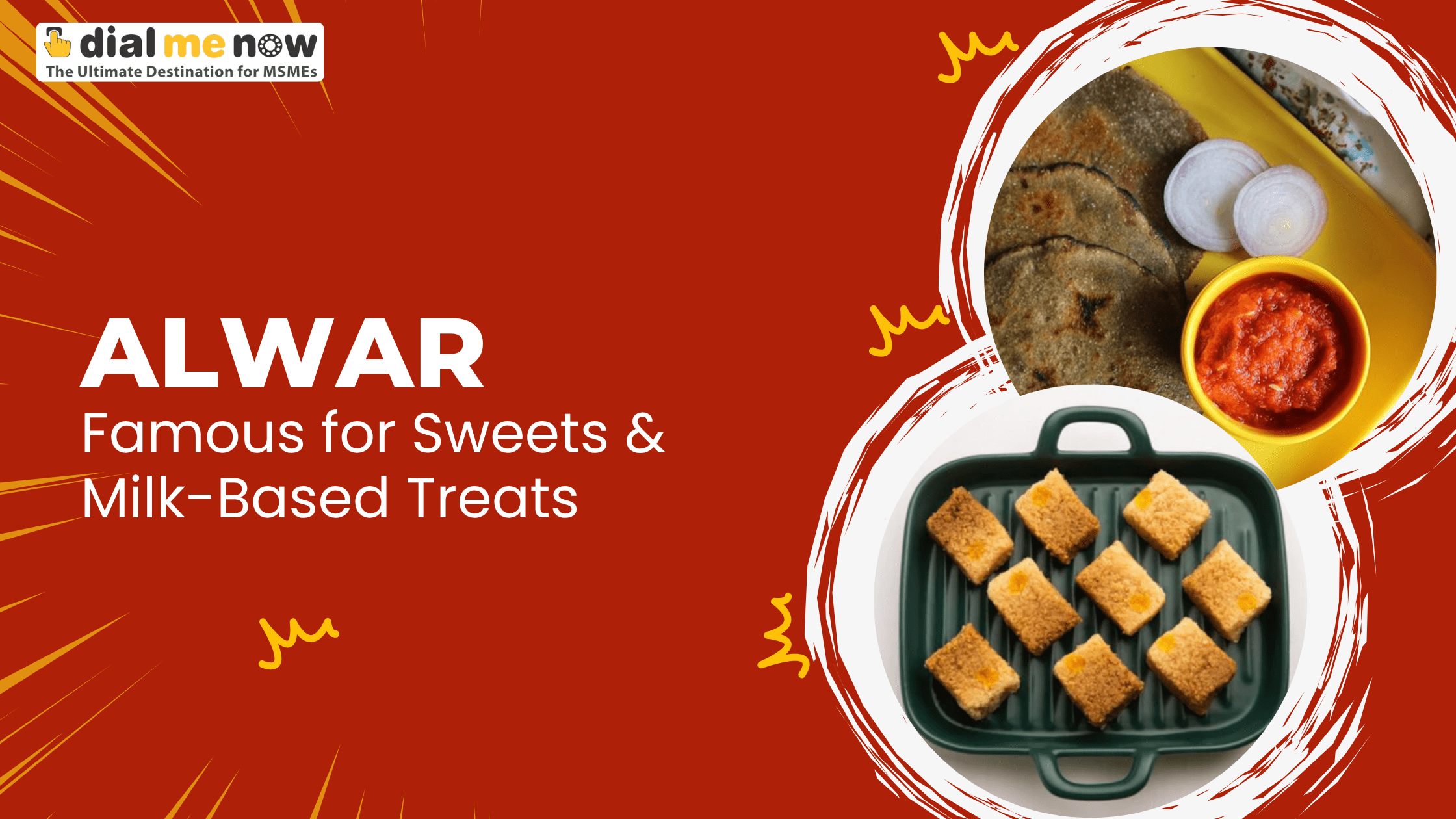
Why food lovers chase the “two-tone” Alwar Kalakand (milk cake) and rustic bajre ki roti with lahsun chutney
If Rajasthan is a thali of bold flavors, Alwar is the mithai counter you can smell from the street. The city’s culinary identity is built on milk-based sweets, especially the iconic Alwar Kalakand (often called Alwar ka mawa or milk cake), a two-shaded block of caramelized, danedar (grainy) milk that’s equal parts nostalgia and craftsmanship. Add to that the comforting, earthy combo of bajre ki roti (pearl-millet flatbread) with lahsun (garlic) chutney, and you’ve got the vegetarian soul of Alwar on a plate.
What makes Alwar’s Kalakand unique?
Texture & technique. Kalakand in Alwar is painstakingly made by slowly simmering full-fat milk until it reduces and splits into a soft, granular mass (danedar), then sweetened and lightly caramelized to create its signature two-tone look—white inside and golden-brown on top and bottom. This isn’t a plain barfi; proper Alwar Kalakand keeps the milk’s grain intact instead of fully homogenizing it. (General background on the sweet and method.
A delicious legend since 1947. Many contemporary sources trace Alwar’s Kalakand fame to Baba Thakur Das & Sons, who are widely credited with popularizing (and often cited as inventing) Alwar Kalakand in 1947. The modest shop is at Kalakand Market, near Hope Circus, and is still the most-searched “original” stop for visitors.
Why the two colors? That light-brown crust is from slow caramelization—the visual cue many locals use to spot the good stuff. Taste of City’s profile of the shop even notes the nutty garnish and danedar body that fans look for.
Where to buy: Hope Circus & the Kalakand Market trail
If you’re searching “Alwar Kalakand original shop”, start at Hope Circus—the roundabout that anchors a dense cluster of mithai stores known informally as Kalakand Market.
Top, long-running pick (often called the original):
- Baba Thakur Das & Sons, Kalakand Market, Hope Circus, Alwar.
What to expect: a classic counter-only mithai shop; the Kalakand often sells out on busy days; typical hours around 8:00 AM–9:00 PM. (Always check on festival days.)
Other well-known sweet shops around Hope Circus / Kalakand Market (handy when the first choice is sold out or you’re sampling around):
- Deen Dayal Agarwal & Sons – listed near Kalakand Market, Ghantaghar, Hope Circus.
- Sanjay Sweet House – Hope Circus area business listing (carry-along options vary).
- You’ll also find multi-city brands and seasonal favorites (like ghevar) scattered around the circle; the Kalakand Market listings and traveler tips will point you to stalls that keep the two-tone milk cake at the center.
Pro tip: Arrive in the morning for the freshest batch, or early evening for a still-warm slab as shops gear up for the dinner rush. Ask for a mixed box (white + brown edges) if you want that textbook Alwar bite. (Timings and “what to expect” corroborated by venue profiles.)
Beyond sweets: Bajre ki roti with lahsun (garlic) chutney
Alwar may be sweet-forward, but its everyday comfort food is the rustic bajre ki roti served hot with spicy lahsun chutney. This duo is a Rajasthani staple: pearl-millet flatbreads bring smoky, earthy notes; the chutney is a fiery mash of garlic + red chiles (often Mathania/Jodhpuri) + a touch of sour. You’ll spot it across dhabas and thali joints, and it’s one of the most-recommended vegetarian bites for visitors.
Nutritionally, bajra is naturally gluten-free and rich in fiber—part of why the roti + chutney combo shows up in winter food guides and “power breakfasts” across Rajasthan.
How to order like a local
- For Kalakand: Ask for a half-kilo slab with both shades. The danedar texture should crumble softly; it shouldn’t be rubbery or pasty. (Method/texture context.
- Pairings: Try a small box of bhuni barfi or ghevar when in season—many Hope Circus shops carry seasonal specials alongside Kalakand. (Venue overview notes. )
- For bajra roti: If the chutney heat scares you, ask for a less-spicy lahsun or pair with curd/chaas to balance it. (General dish background.
3-stop walking trail (90 minutes, light appetite)
- Baba Thakur Das & Sons (Kalakand Market, Hope Circus) – buy a fresh two-tone Kalakand. (History & location.
- Circle around Hope Circus – peek into neighboring counters like Deen Dayal Agarwal & Sons for a comparative bite or to pick up savory kachoris.
- Thali/Dhaba near Hope Circus – end with bajre ki roti + lahsun chutney; many places list it among staples or as part of a Rajasthani thali. (Dish background references.)
Practical tips: freshness, packing, storage
- Buying & packing: Ask the shop to vacuum-seal or double-wrap your Kalakand box if you’re traveling. Most places are used to out-station requests.
- Shelf life: Kalakand is milk-heavy. As a rule of thumb, finish within 1–2 days at room temp (cool weather) and 3–5 days refrigerated; it’s best eaten fresh. When in doubt, ask the counter—individual shops post their own guidance.
- Transport: If you’re on a long journey, keep boxes in a cool bag; avoid direct sunlight.
- Spice check: For lahsun chutney, request “thoda kam teekha” (less spicy) if you’re new to Rajasthani heat. (General dish context for spice level.)
Why Alwar for vegetarians (and keyword intent: “Alwar famous food veg”)
If your search is “Alwar famous food veg”, you’ll find:
- Milk-based mithai led by Kalakand—the city’s signature.
- Everyday veg staples like bajre ki roti + lahsun chutney, kachoris, and seasonal ghevar—easy to find around Hope Circus and central markets.
This makes Alwar an easy destination for pure-veg travelers and desi dessert hunters alike.
Quick buyer’s checklist for “original” Alwar Kalakand
- Location: Start at Hope Circus / Kalakand Market; look for long-running shops with morning batches.
- Visuals: Two-tone (white + caramel brown), grainy not rubbery.
- History tag: Baba Thakur Das & Sons is frequently cited in histories of Alwar Kalakand dating to 1947. Use it as your baseline taste test.
- Timing: Go early or early evening to avoid sold-out trays. (Venue profiles/tips.)
FAQs
Q1. Which is the “original” Alwar Kalakand shop?
Many guides and tourism sources point to Baba Thakur Das & Sons (est. 1947) at Kalakand Market, Hope Circus as the pioneer associated with Alwar’s Kalakand. Today, several neighboring shops also make excellent versions—use Hope Circus as your starting hub.
Q2. Where exactly is Kalakand Market?
Around Hope Circus in central Alwar. Listings call out Kalakand Market/ Ghanta Ghar/ Hope Circus as the cluster with multiple mithai counters.
Q3. What are typical shop timings?
Expect roughly 8:00 AM–9:00 PM at the pioneer shop; hours can vary by season and festival days—always check at the counter.
Q4. Is Kalakand the same as milk cake?
In Alwar usage, yes—Alwar Kalakand is often called milk cake or Alwar ka mawa. The local style emphasizes a soft, danedar crumb and caramelized edges.
Q5. What’s special about bajre ki roti with lahsun chutney?
It’s a classic Rajasthani veg combo—smoky millet roti with a spicy garlic-chile chutney. You’ll find it in thalis and dhabas across the state and in/around Alwar’s center.
Q6. Can I get sugar-free or low-sugar sweets?
Many sweet shops now offer sugar-free options; ask at the counter (availability varies).
Q7. How do I carry Kalakand home?
Request tight packing; keep cool; finish quickly or refrigerate. For long trips, use a cooler bag. (General handling guidance based on the sweet’s dairy base.
Q8. What vegetarian foods, besides sweets, are famous in Alwar?
Bajre ki roti with lahsun chutney, kachoris, and seasonal ghevar are widely available; you’ll see them in “must-eat Rajasthan” lists too.
Disclaimer
Local timings, prices, inventory, and policies change—especially around festivals. Historical attributions (like the 1947 origin story) are based on contemporary sources and tourism/food guides and may reflect popular consensus rather than legal trademarks. Always confirm in-store before you go.