

Agro-Processing in Ganganagar: The ‘Food Basket’ of Rajasthan and its Business Potential
1/27/2026
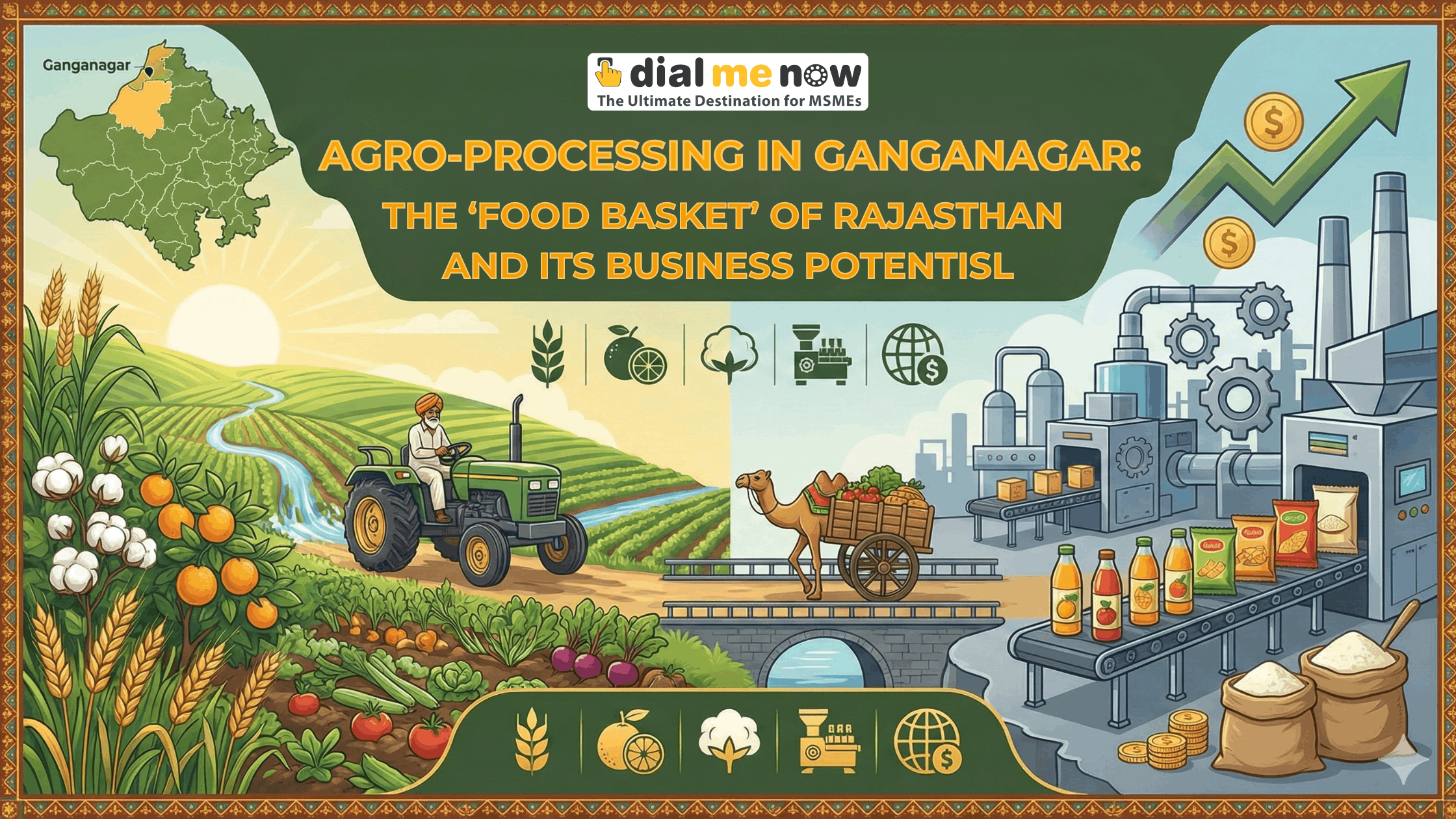
Sri Ganganagar, often hailed as the “Food Basket of Rajasthan” or the “Punjab of Rajasthan,” is currently undergoing a massive industrial metamorphosis. As of 2026, the district is no longer just a primary producer of wheat and kinnow; it has become a high-velocity hub for agro-processing and value addition.
Thanks to the perennial waters of the Indira Gandhi Canal and the Gang Canal, Ganganagar has the highest agricultural productivity in the state. However, the real business story for 2026 is the shift from farming to processing. From citrus waxing plants to advanced flour mills and mustard oil refineries, Ganganagar is ripe with potential for entrepreneurs and investors.
Why Ganganagar is the “Food Basket” (The Resource Base)
Ganganagar’s dominance stems from its unique geography and irrigation infrastructure. In the 2025–2026 agricultural cycle, the district continues to lead Rajasthan in several key crops.
The “Big Three” Commodities:
- Kinnow (The Citrus King): Ganganagar accounts for over 80% of Rajasthan’s kinnow production. In 2026, the district is hosting the Kinnow Mahakumbh (January 23–25), highlighting its global export potential.
- Wheat & Barley: It is the top producer of wheat in the state. The barley produced here is of premium “Malt” grade, attracting interest from international brewery chains.
- Mustard (Yellow Gold): Rajasthan produces nearly half of India’s mustard, and Ganganagar is a top-performing district, providing a massive raw material base for oil extraction units.
Emerging Business Opportunities in Agro-Processing
With a bumper harvest expected in 2026 (kinnow production alone is estimated to be 25–30% higher than last year), the following sub-sectors are seeing high demand:
A. Citrus Processing & Value Addition
While most kinnows are currently sold fresh, there is a massive gap in:
- Cold Press Juicing: Producing fresh, preservative-free kinnow juice for urban markets.
- Peel Oil Extraction: Kinnow peels are rich in essential oils used in the cosmetics and fragrance industries.
- Waxing & Grading Plants: To meet 2026 export standards for the Middle East and Southeast Asia, advanced grading lines are essential.
B. Mustard Oil Refineries & Solvent Extraction
With the “Mustard Boom” of 2025, investors are looking at:
- Kacchi Ghani Units: High-demand, traditional cold-press oil units.
- De-oiled Cake (DOC): Using solvent extraction to produce high-protein animal feed for export.
- Flour & Malt Processing
- Specialty Flours: Producing “Chakki Fresh” Atta and multi-grain blends for health-conscious consumers in nearby Delhi and Punjab.
- Malting Plants: Processing Ganganagar’s high-quality barley into malt for the food and beverage industry.
Government Incentives & Infrastructure (2026 Update)
The Rajasthan government is offering aggressive incentives under the Rising Rajasthan 2025–2026 initiative to promote Ganganagar as an agro-processing hub.
Financial Boosters:
- Capital Subsidy: Up to 35% subsidy (capped at ₹10 Lakh) for individual micro-food processing units under the PMFME Scheme.
- Mandi Tax Exemption: 100% exemption of Mandi Tax for 7 years for new agro-processing units.
- Electricity & Stamp Duty: 100% exemption on electricity duty for 7 years and full waiver of stamp duty on land purchase.
Infrastructure:
- RIICO Agro Food Park: Ganganagar is home to one of Rajasthan’s four dedicated Agro Food Parks, providing plug-and-play facilities with dedicated water and power lines.
- Logistics Hub: New tender works in the Mandi Yard (Grain) are improving storage and HT/LT line infrastructure as of January 2026.
Challenges: Navigating the 2026 Landscape
Despite the potential, entrepreneurs must be aware of specific local hurdles:
- Water Volatility: While irrigated, canal closures during peak orchard demand remain a concern.
- Price Fluctuations: Bumper crops in 2026 have occasionally led to price crashes; hence, having a Processing/Storage wing is vital to protect against market volatility.
- Export Bottlenecks: Improving railway connectivity for perishable exports is a key focus for 2026.
❓ Frequently Asked Questions (FAQ)
Q1: Why is Sri Ganganagar called the “Food Basket of Rajasthan”? A: Due to its advanced canal irrigation system and highly fertile soil, it has the highest per-hectare productivity in the state for wheat, mustard, and citrus fruits.
Q2: What is the “Kinnow Mahakumbh”? A: It is a state-level farmers’ fair held in Ganganagar (Jan 23–25, 2026) to showcase citrus varieties, promote exports, and facilitate business-to-farmer (B2F) interactions.
Q3: How much subsidy can I get for a food processing unit? A: Under current 2026 schemes (PMFME), you can get a 35% credit-linked capital subsidy up to ₹10 Lakh. Larger projects can qualify for customized incentive packages.
Q4: Is Ganganagar suitable for organic farming? A: Yes, there is a growing movement toward organic kinnow and pulses, though transition periods are required for previously chemically-farmed soils.
Q5: What are the main Rabi and Kharif crops here? A: Kharif: Cotton, Guar, and Moong. Rabi: Wheat, Mustard, and Barley.
Q6: Are there any specific industrial zones for food units? A: Yes, the RIICO Agro Food Park in Sri Ganganagar is specifically designed for food processing industries.
Q7: Can I export Kinnows to other countries from Ganganagar? A: Yes, Ganganagar kinnows have high demand in Bangladesh, the Middle East, and Russia. Special “Kinnow Trains” are periodically operated for this purpose.
Q8: What is the water source for irrigation in Ganganagar? A: The district is primarily irrigated by the Indira Gandhi Canal, Gang Canal, and the Bhakra Canal systems.
Disclaimer
Agro-processing involves market risks related to crop yields, weather patterns, and fluctuating commodity prices. Information on government subsidies and Mandi taxes is based on current 2026 policies and is subject to change. Investors are advised to perform a detailed feasibility study before capital allocation.