

Affordable Marketing Ideas for Small Businesses With Limited Budget
12/17/2025
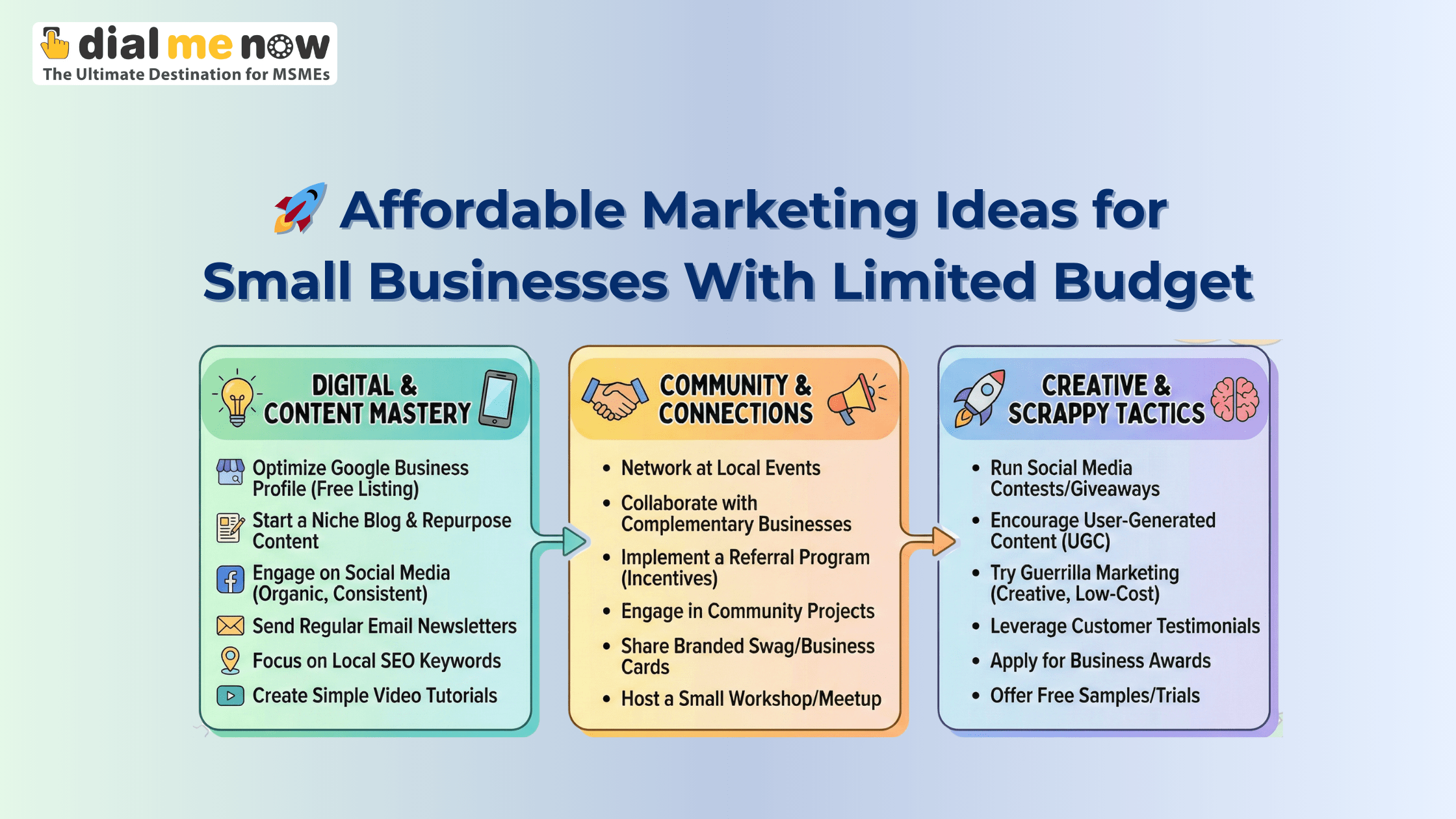
Introduction
In the world of business, there is a common misconception that you need a massive “war chest” of capital to make an impact. While big-budget corporations spend millions on Super Bowl ads and celebrity endorsements, the modern digital landscape has leveled the playing field.
For small business owners, marketing isn’t about outspending the competition; it’s about outthinking them.
With the right strategy, a limited budget can actually be an advantage—it forces you to be creative, personal, and highly efficient. Whether you are a local service provider, a niche retailer, or a startup, this guide will walk you through the most affordable, high-impact marketing ideas for 2025 that deliver maximum ROI without draining your savings.
Master the “Organic” Discovery: Local SEO
If people can’t find you, they can’t buy from you. The most cost-effective way to get “discovered” by high-intent customers is through Local SEO.
A. Google Business Profile (The Free Powerhouse)
Your Google Business Profile (GBP) is your digital storefront. It’s free and places you directly on Google Maps.
- Optimize it: Ensure your Name, Address, and Phone number (NAP) are consistent.
- The Review Engine: Actively ask happy customers for 5-star reviews. Google prioritizes businesses with high ratings and frequent activity.
- Post Regularly: Treat GBP like social media. Post photos of your products, behind-the-scenes clips, and weekly offers.
B. Local Keywords
You don’t need expensive SEO tools to find what people are searching for.
- Use Google Auto-complete (type your service + “in [Your City]”) to see common queries.
- Update your website’s “Service Pages” to include these local phrases.
Leverage High-ROI Automation: Bulk SMS & Email
When you have a limited budget, you need to own your audience. Social media algorithms can change, but your phone and email lists belong to you.
A. The Power of SMS
SMS marketing has an incredible 98% open rate. For small businesses, it’s the fastest way to drive immediate traffic.
- Flash Sales: “Show this text for 10% off today!”
- Appointment Reminders: Reduce “no-shows” which cost you money.
- Lead Nurturing: Use automated welcome texts for anyone who signs up on your site.
B. Email Nurturing
Email is virtually free if you have a small list.
- Newsletter: Send weekly tips (not just sales pitches) to keep your brand top-of-mind.
- Abandoned Cart: If you have an online store, automated emails to people who left items behind can recover 10-15% of lost revenue.
Social Media Strategy: Quality Over Quantity
You don’t need to be on every platform. Pick one or two where your customers actually hang out.
- Short-Form Video (Reels/TikTok): Algorithms are currently favoring video. A simple 15-second “day in the life” or “how it’s made” video can reach thousands of people organically without a single cent in ad spend.
- User-Generated Content (UGC): Encourage your customers to tag you in their photos. Repost their content. It’s free “social proof” and saves you time on content creation.
- Community Engagement: Join local Facebook groups. Don’t spam—instead, provide helpful advice. When people see you as an expert, they will naturally check out your business.
Collaborative Marketing: Partnerships & Referrals
Growth is faster when you aren’t doing it alone.
A. Non-Competitive Partnerships
Find a business that serves the same audience but doesn’t sell the same thing.
- Example: A wedding photographer and a florist. They can cross-promote each other to their clients or run a joint “wedding giveaway.”
B. Referral Programs
Your current customers are your best salespeople.
- Give to Get: Offer a small discount or a freebie for every new customer they bring in.
- Make it Easy: Give them a physical “referral card” or a digital link they can easily share on WhatsApp.
Content Marketing: The “Educator” Advantage
Small businesses often win because they are the local experts. Content marketing allows you to showcase that expertise for free.
- Start a Blog: Write about common problems your customers face. If you are a plumber, write “5 Signs Your Water Heater is About to Fail.” This builds trust before the customer even calls you.
- How-to Guides: Create simple PDF guides or checklists. Give them away for free on your website in exchange for an email address (Lead Magnet).
- Live Q&A: Use Instagram or Facebook Live to answer customer questions in real-time. It’s free, authentic, and highly engaging.
Guerrilla Marketing: Thinking Outside the Box
Low-cost, high-creativity tactics often get more attention than expensive billboards.
- Sidewalk Chalk: If you have a physical store, use colorful chalk to draw attention to your entrance or list your “Special of the Day.”
- Stickers: Create high-quality, cool stickers with your logo. People put them on laptops and water bottles, turning them into walking advertisements.
- Host a Mini-Event: A “Meet the Maker” night or a free workshop in your shop can drive foot traffic and local press interest.
Strategic Paid Ads (The “Micro-Budget” Approach)
If you do have a small amount to spend (e.g., $5 a day), use it surgically.
- Retargeting Ads: Instead of showing ads to everyone, only show them to people who have already visited your website. These people are much more likely to convert.
- Local Awareness Ads: Use Facebook or Instagram to show ads only within a 5-mile radius of your shop. This ensures every cent of your budget is spent on people who can actually visit you.
Frequently Asked Questions (FAQ)
Q1: How much should a small business spend on marketing? A: A common rule of thumb is 5-8% of your gross revenue. However, if you are just starting, you can start with almost zero by focusing on organic social media and Google Business Profile.
Q2: Is SMS marketing better than Email? A: They serve different purposes. SMS is for urgency (Flash sales, reminders). Email is for nurturing (Newsletters, brand stories). Using both in an “Omnichannel” approach is best.
Q3: How long does it take to see results from Local SEO? A: You can see local map rankings improve in as little as 30-90 days if you are consistent with reviews and profile updates.
Q4: Do I need a professional photographer for my social media? A: No. In 2025, “authentic” and “raw” content often perform better than overly polished ads. A modern smartphone is more than enough.
Q5: What is the most effective “free” marketing tool? A: Without a doubt, the Google Business Profile. It is the number one driver of local foot traffic.
Q6: Can I do marketing myself, or should I hire someone? A: You can certainly do the basics yourself. However, as you scale, the “opportunity cost” of your time becomes high. Hiring an expert for technical tasks like SEO and automation usually pays for itself in increased sales.
Q7: How do I get more Google reviews? A: The best way is to ask! Send an automated SMS immediately after a purchase with a direct link to your review page.
Q8: Are Facebook Ads still worth it for small businesses? A: Yes, but only if you use tight geographic targeting. Don’t try to reach the whole country; focus on your neighborhood.
Disclaimer
The marketing strategies provided in this guide are based on current industry trends and general best practices. Marketing performance is subject to various factors, including market competition, industry type, and execution quality. While these methods are designed to be cost-effective, results are not guaranteed. We recommend a “test and learn” approach to find what specifically resonates with your unique audience.
Conclusion
Marketing a small business on a limited budget isn’t a handicap; it’s an opportunity to build a more authentic, community-focused brand. By mastering Local SEO, embracing the speed of SMS, and creating high-value content, you can drive significant growth without a massive investment. The key is consistency. Pick two or three of these ideas, execute them perfectly, and watch your business thrive.